This Account Has Pretty Much Everything You Need to Never Pay for the Game Again.

From state-of-the-fine art stadiums to dazzling opening ceremonies, host cities pour unbelievable amounts of money into the Olympic Games. In the concluding xviii years, millions of dollars spent preparing for the Games has easily turned into several billion and, every four years, the need to impress the globe looms fifty-fifty larger.
But this off-field contest has led to abandoned venues, the displacement of local residents and Ethnic folks, detrimental pollution and, of course, staggering debt. We're taking a wait at some of the grievous means the Olympics take impacted former host cities — even after they pass the torch.
Inspired by the aboriginal contest held in Olympia, the first mod Olympic Games were held 126 years ago in Athens, Hellenic republic, in 1896. These days, the Summer and Winter Games attract thousands of athletes from over 200 nations — not to mention billions of viewers.
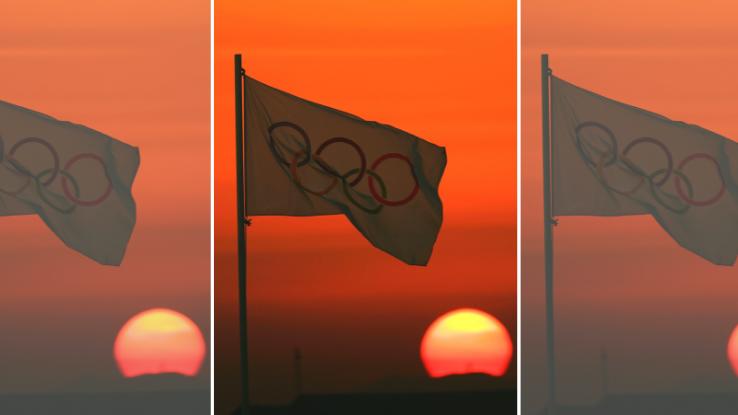
As such, host nations demand to build the infrastructure, housing and venues to accommodate all of the spectators and athletes that the world's foremost sporting event draws. To brand matters more than complicated, the Games are all about the spirit of contest, both on and off the pitch. That means the bid to outshine others has caused host cities to enhance the bar — and, as a result, the bill.
2008 Beijing Summer Games
In 2008, Beijing, China, hosted 1 of the most impressive Summer Games on record. It's also the almost expensive Summertime Games on tape — and second-most expensive Olympics — with a $40 billion toll tag. For comparison, Tokyo 2020, which was postponed due to the COVID-xix pandemic, has come in at $12.6 billion — although some sources merits the final price tag volition actually exist more than than double that amount.
So, what did all of that money get toward to prep for Beijing 2008? Lauded every bit one of the greatest opening ceremonies in Olympics history, Beijing'south kick-off issue definitely took a big seize with teeth out of the upkeep. The Guardian noted that, between the expense and pageantry, the ceremony "demonstrat[ed] to the world that the new Red china intends to make its presence felt." And felt it was — past a whopping 4 billion viewers.
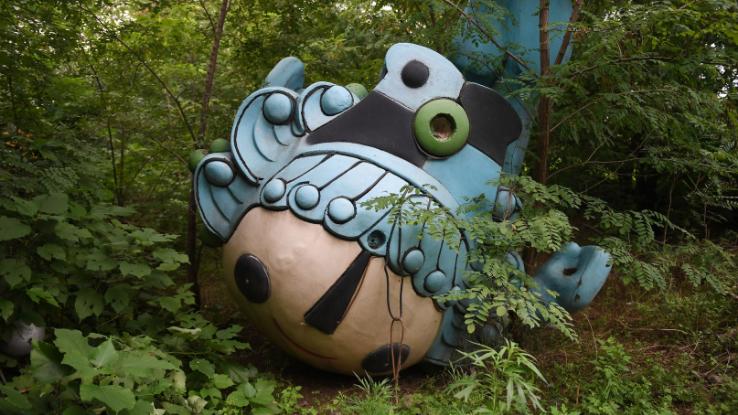
In improver to "wowing" the globe with spectacle, Beijing also invested quite a fleck in infrastructure, creating the at present-iconic National Stadium — nicknamed the "Bird'due south Nest" — as well as facelifting Chaoyang Park. In total, nine temporary venues were synthetic for the Games with the intention of being torn down afterward.
Unfortunately, many of these "temporary" venues however stand today, slipping further into disrepair. The overgrown Laoshan Bicycle MotoCross Park has reportedly become an unofficial community garden. In 2022, Beijing will go the first metropolis to host both the Winter and Summer Games, which means some venues could be repurposed and refurbished.
2004 Athens Summertime Games
"Welcome Home" was the motto of the 2004 Summer Games — and Hellenic republic spared no expense when getting Athens ready for the unforgettable upshot. Ahead of the Games, media outlets, likeSports Illustrated and The New York Times, lambasted Greece. Meanwhile, sixty Minutes questioned the city'south condom — an interesting bending in the wake of the Atlanta Games, which were held two Summer Olympics prior.
Just Hellenic republic carried on, constructing the Hellinikon Olympic Complex and other sports venues; a new international airport; a redesigned Athens Metro system; several boosted tram and light runway systems; more pedestrian walkways; and the all-important Attiki Odos highway. In the end, the Olympics price Greece $ix.95 billion.
In addition to generating all of that non-sports-related infrastructure, the Games besides helped boost Hellenic republic'due south tourism, with the number of visitors jumping to a record sixteen.17 million in 2007. And, at the time, Athens was tremendously successful: the opening ceremonies dazzled and the venues massively impressed. Many of those media outlets issued "apologies," but the negative press ahead of the Games did impact ticket sales, with tourists fearing that Athens was unsafe.
However, ahead of every Summertime Games, media outlets however reassess the ill furnishings of the Olympics on Greece. In particular, media outlets connect the cost of the Olympics with the country's government-debt crisis. The price of the 2004 Olympics was just a mere 4 per centum of Hellenic republic's total debt.
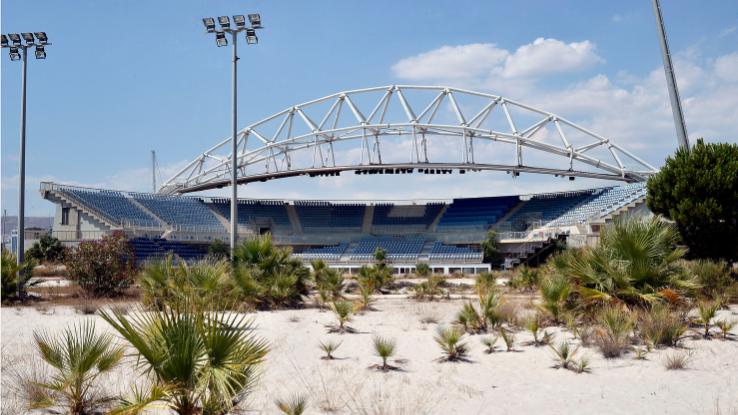
As for all those decaying venues you've seen pictures of? While some, like the softball stadium, did fall into disrepair, nearly accept been repurposed into other sporting venues, training facilities, archives, low-income housing and more. Many of the "unused" venues became sites for temporary camps for refugees.
1992 Barcelona Summer Games
The 1992 Summer Games marked the first Olympics since the cease of the Cold War, significant at that place weren't any boycotts for the offset time in a while. To prepare for 9,356 athletes, Spain poured roughly $9.4 billion into the '92 Summer Games.
In total, the nation refurbished and synthetic 43 venues, but some of the cost went toward captivating dramatics too. Archer Antonio Rebollo lit the Olympic cauldron past shooting a flaming arrow over the peak of it, igniting a pillar of gas.

Moreover, the 1992 Summer Games gave Barcelona a reason to invest in infrastructure that would not just amend the lives of residents but as well included features that would help make the metropolis more tourist-friendly also. Billions of dollars helped to modernize the airport, construct ring roads and refurbish hotels.
All in all, the Barcelona Games were a whopping 266 percent over budget — a record at the time. Simply nearly believe this investment paid off, in a sense. The televised upshot helped put Barcelona on the map, making it one of Europe'south almost-visited cities. In fact, the showcase worked so well that Barcelona faces overtourism today.
1998 Nagano Winter Games
While many of the events took identify in the nearby mountain communities of Hakuba, Karuizawa, Nozawa and Yamanouchi, Nagano was meant to serve as the tourism center for the 1998 Winter Games. A staggering 2,176 athletes from 72 nations competed at Nagano, setting a then-record for participation.
In order to fix for the spread-out Games, Japan focused on improving its transportation network and edifice a new expressway. Near notably, the host nation synthetic the high-speed train Shinkansen to connect Nagano, Tokyo and several other towns. When all was said and washed, the Games came in at an alleged $ten.5 billion.

While locals would later benefit from improvements to infrastructure, the investment worked a little too well during the Games. The high-speed railroad train was so fast and so user-friendly that spectators chose to stay in Tokyo-based hotels, resulting in a huge loss for the newly renovated ski resorts in Nagano.
Despite the striking local hotels took, an impressive 1,275,529 spectators attended the Nagano Games, and 89.4 percent of available tickets were sold. Television coverage of the Games increased by 55 percentage — compared to the '94 Games — and a whopping 10.7 billion viewers tuned in over the sixteen-day stretch. Not a bad marketing entrada for Japan, right?
1988 Seoul Summer Games
The 1988 Summer Olympics in Seoul marked the last Games for both the Soviet Wedlock and Eastward Germany. While several nations — including North Korea and Cuba — boycotted the Games, Seoul was actually the most well-attended Olympics of the Cold War era with 159 nations and viii,391 athletes.
Before the Olympic bid was submitted, unelected coup leader Chun Doo-hwan became president of South korea and was looking for ways to legitimize his rule and modernize the country. Using the 1964 Tokyo Games equally a blueprint, South Korea hoped the '88 Games would introduce the country to the world.

Many of the city's 31 venues were constructed just two years earlier for the Asian Games, which proved to be a vital exam run for hosting the Olympics. Co-ordinate to Forbes, $four billion was spent for the Seoul Games, while reported profits for the Games came in at just $300 million.
Simply Seoul wasn't without other, not-financial problems. According to an Associated Press article, people the government deemed "vagrants" — in authenticity, unhoused folks — were arrested and sent to encampments. Though a prosecutor visited the notorious Brothers Dwelling military camp, the authorities limited their access, fearing an investigation ahead of the Olympics.
2000 Sydney Summertime Games
Australia had the great fortune — and added force per unit area — of hosting the Summertime Olympics in 2000, which were dubbed the Millennium Olympic Games. Perhaps ahead of its time, Australia worked to minimize the Games' environmental bear upon, investing in venues built from sustainable materials.
Keeping in line with this "green attitude," the nation devised its first big-scale urban water-recycling system alee of the Games to conserve water and energy. Meanwhile, the Sydney Olympic Park, the main site of the Games, allowed the metropolis to restore the land and create one of the largest urban parks in Australia.
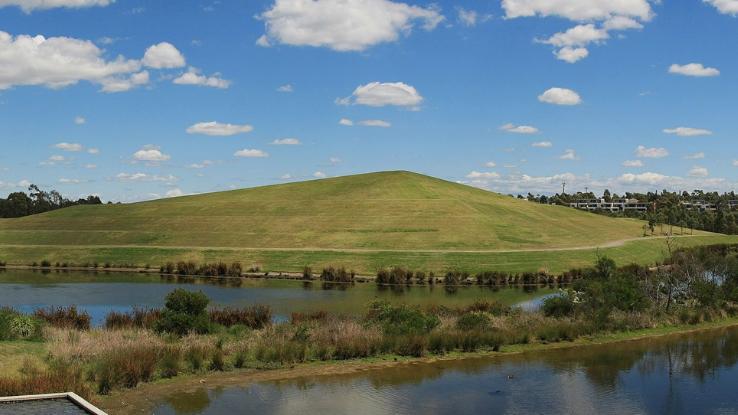
This refurbishment of Sydney'due south degraded country and focus on environmental practices came with a steep — but worthwhile — $3.eight billion cost tag. To this day, the water-recycling organisation saves 850 1000000 liters of drinking water annually, and the onetime Olympic Park has become a focal point for the city.
Although in the years that followed tourism to New South Wales didn't grow too much, the Games certainly improved Australian tourism on the whole. Despite locals' criticisms that the city overlooked infrastructure bug and the metropolis's western suburbs, in that location's no doubt that Sydney did an admirable job maintaining its venues at least.
2016 Rio de Janeiro Summertime Games
When Brazil won the bids for both the 2014 FIFA World Loving cup and the 2016 Summer Olympics, the metropolis of Rio de Janeiro saw these victories as an opportunity to re-invest in the city'southward infrastructure — a sort of "2 for the price of i" mindset. Infamously, things didn't quite work out for Rio.
The flagship Maracanã Stadium was originally built for the 1950 FIFA World Cup, though it had remained unfinished — meaning refurbishment would price quite a bit. The host city as well invested in a $50 meg aquatic center that was meant to be disassembled after the Games. (And so much for long-term investment, right?)
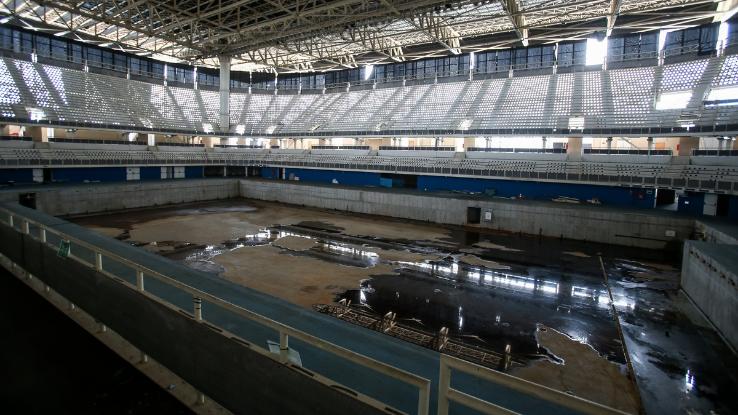
During the Games, Australian swimmers reported that the h2o in the aquatic center was thick and cloudy. A nearby diving center was dubbed the "Green Monster" by locals. And, afterward nearly 70 years, Maracanã is still under structure. Simply the devastating $13.two billion cost tag wasn't Rio's only outcome.
In 2014, a money-laundering scandal that implicated numerous politicians came to light, leading to unrest and financial crisis. To make matters worse, an outbreak of the Zika virus and Rio's decades-long inability to treat its raw sewage deterred competitors. Moreover, an estimated 60,000 people lost their homes to make style for the Games.
1976 Montreal Summertime Games
Montreal marked the first fourth dimension Canada hosted the Olympic Games. While Calgary and Vancouver have both since hosted the Winter Games, the 1976 upshot in Montreal is the but time Canada has hosted the Summer Games and then far. The largest investment was the creation of the Olympic Stadium, which was dubbed the "Big O."
Almost 30 countries, including many African nations, boycotted the Games when the International Olympic Commission (IOC) refused to ban New Zealand in the wake of the nation'southward rugby squad defying a sporting embargo. All the same, a whopping 6,084 athletes competed in the Montreal Games. All of that investment led to a $ane.2 billion cost tag.
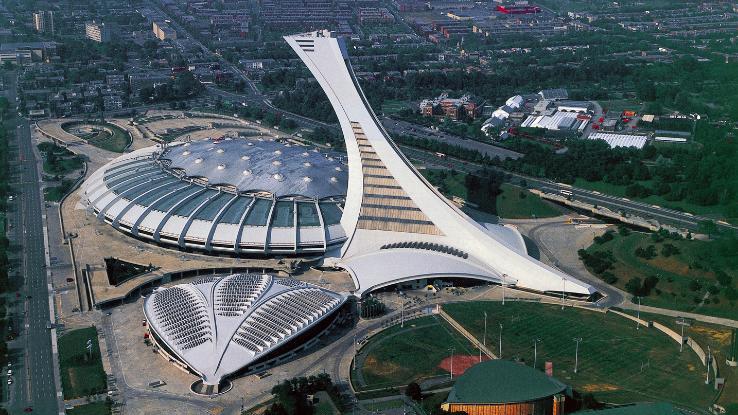
The Games dragged Montreal into a deep debt information technology didn't pay off until 2006 — three decades later. Many of the issues arose from construction delays and a multi-billion dollar corruption scandal. As such, locals dubbed the Olympic Stadium the "Large Owe."
According to the Oxford Olympics Study, the outturn cost of the Montreal Games was an estimated $six.1 billion past 2015 standards — with a record-setting cost overrun at 720 percent. (By comparison, Rio faced a cost overrun of 51 per centum.) The Guardian writes "forty years on, no other Olympics has and then thoroughly cleaved a city."
2014 Sochi Winter Games
The 2014 Sochi Winter Games are all the same the near expensive Games in Olympic history. Initially, Russian federation budgeted effectually $12 billion to transform the minor town into a winter wonderland. Merely that figure presently ballooned to a staggering $51 billion, making Sochi's budget more than all of the previous Wintertime Games combined.
Ahead of Sochi, media outlets wondered if Russia would be able to complete its massive overhauls to the area'south infrastructure and multiple mass construction projects on time. A record number of 2.ane billion viewers tuned in — to see both the competitions and the outcome of the plush project.

Alee of the Games, some Circassian organizations objected to the Games being held on their ancestral country when Russia had historically displaced and murdered members of the indigenous grouping. Furthermore, Russian federation'due south anti-LGBTQ policies raised a huge corporeality of concern internationally.
A few days before the Games, journalists arrived to find unpaved roads, unclean h2o and hotel rooms that were half-finished. Although Sochi is now Russian federation'southward height resort destination, the uncovering of a state-sponsored doping program in Russia led the IOC to strip 13 medals from Russian athletes, further marring the 2014 Games.
1980 Lake Placid Wintertime Games
The 1980 Winter Games in Lake Placid, New York, are perchance best known for being the backdrop to the U.S. men'south hockey squad's "Phenomenon on Ice" victory over the Soviet Union. Otherwise, Lake Placid is a small-scale village upstate, and, at the fourth dimension, information technology needed to be transformed into an Olympics-level host "city."
In total, Lake Placid spent an estimated $132 one thousand thousand on the Winter Games and went into debt of about $8.5 1000000. Some of the more expensive venues included a $xiv.9 one thousand thousand Olympic loonshit and a multi-sport complex for speed skating, bobsled and more that totaled $sixteen one thousand thousand.

New York State wasn't necessarily interested in ground the pecker for the Winter Games only eventually had no pick when Lake Placid couldn't pay up. In exchange, the state nabbed the ownership rights to the village'due south ski jumps, field business firm and speed-skating rink.
These days, New York residents are still paying for the upkeep of the venues, which has caused some to advocate for the Olympics returning to Lake Placid — to, you know, use these spaces. Nonetheless, the 1980 Games were a financial mess, and, stranger still, the state's 2026 proposal suggested using Yankee Stadium — located five hours away in the Bronx — for some events.
1994 Lillehammer Winter Games
The northernmost urban center to ever host an Olympic Games remains Lillehammer, a tiny ski town in Norway. The 1994 Games also marked the offset fourth dimension the Winter Games operated under an Olympic Truce; despite ongoing wars, the onetime Federal Democracy of Yugoslavia was allowed to compete.
Notably, the boondocks wanted to host the first "green" Games, eager to brand sure venues were integrated properly with the surrounding surroundings. For instance, an ice rink was formed out of a blasted-out cave, and special attention was paid to how the venue would impact nearby species and migratory bird populations.

However, it'south not easy being light-green. And it's not inexpensive either. The various construction projects — buildings and venues made of organic materials — totaled over $1 billion. The Oxford Olympics Study noted that the outturn toll of the Games came in at $2.2 billion with a price overrun at 277 per centum.
Contributing just $289 million, Lillehammer called upon the Norwegian government for some financial assist. These days, the Olympic spirit still burns brightly in Lillehammer, which hosted the Youth Olympics in 2015 and continues to welcome Olympics lovers to its old venues and remarkable ski resorts.
1984 Los Angeles Summer Games
Los Angeles hosted the Olympics for the outset time in 1932 and did then again in 1984. In response to the American-led boycott of the 1980 Summertime Games in Moscow, a full of 14 countries, including the Soviet Matrimony and Due east Frg, did not participate.
Thanks to the '32 Games, L.A. already had a few Olympic-sized venues up its sleeve — the Los Angeles Memorial Coliseum and the Rose Bowl. The '84 Games also coincided with the expansion of professional sports teams in the L.A. surface area, which helped defray costs and ensure that stadiums wouldn't be left to rot afterward.
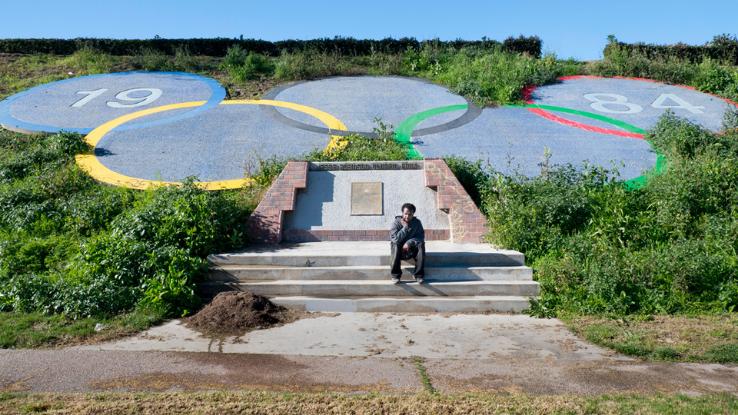
When adjusted for inflation, The Oxford Olympics Study reports that the outturn cost of the Los Angeles 1984 Summer Olympics was $719 million. Thanks to low structure costs and private funding, L.A. found a way to brand the plush event work — at least fiscally speaking.
In fact, L.A. hosted 1 of the near financially successful Summer Games on tape. When adapted for aggrandizement, television receiver rights, commercial sponsorship and ticket sales resulted in just nether $1 billion in acquirement. Moreover, most of the venues congenital for the '84 Games are nonetheless used today for both games and concerts.
1996 Atlanta Summer Games
The 1996 Games in Atlanta were the fourth Summer Olympics to take identify in the U.S. The Games also marked the centennial of the first modern Olympics, which had been held in Athens in 1896.
Prior to the Games, Atlanta was criticized for overly commercializing the Olympics. But past following Los Angeles' blueprint, Atlanta turned the Games into a coin maker. The budget came in at $i.7 billion, with the government footing the neb for security measures and roughly $500 million of taxpayer money existence used to set roads and build Centennial Olympic Park.
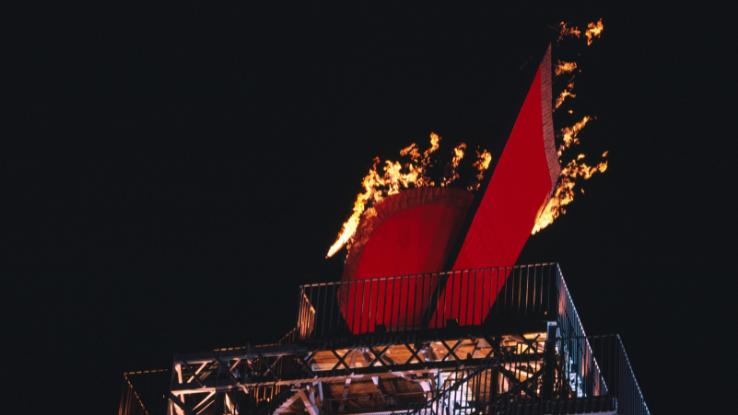
Atlanta prepared for the Olympics for about vi years, which created 80,000 jobs and had an economic touch on of roughly $5.fourteen billion. Additionally, ticket sales, sponsorship rights and the sale of domestic broadcast rights drew in a combined full of over $x million.
While two million visitors collection Atlanta's tourism and helped plough the city into a tourist destination long afterwards, the success of the Games was somewhat overshadowed by the tragic bombings in Olympic Park. A pipe bomb, planted by Eric Robert Rudolph, injured 111 people and is connected to at least two deaths.
How Does Tokyo 2020 Compare?
Amongst the ongoing COVID-xix pandemic, the International Olympic Commission (IOC) and the Japanese government announced the postponement of the Summertime Games back in March 2020. While the "New Start Tokyo 2020" committee has institute a path forward, forging alee came with a ton of new postponement- and pandemic-related costs. Not to mention, in the last 15 years, millions spent have hands turned into several billion, and, every four years, the demand to print the world looms fifty-fifty larger.
According to Business Insider, the toll of the Tokyo Olympics has ballooned to double that of the official $12.6 billion planned cost back in 2020. In the wake of the postponement, that price has reached effectually $15.4 billion — though, every bit reported by Sports Illustrated, "Government audits advise the number is closer to $25 billion."
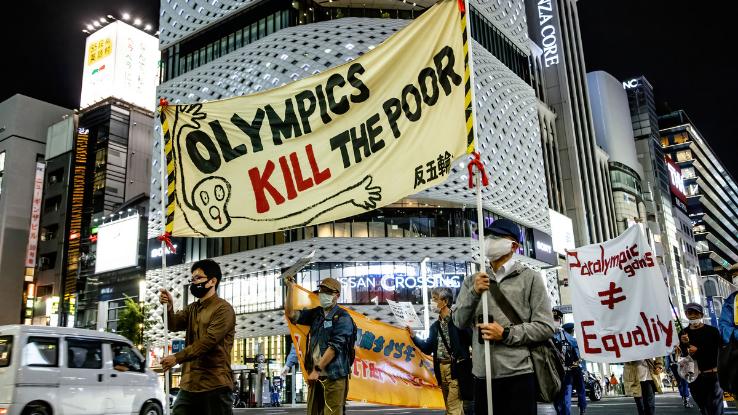
The Anti-Olympics Movement That's Gaining Momentum
As we've written about in our coverage of Tokyo 2020, a resounding 80 pct of Japanese citizens surveyed believed that the Games wouldn't happen — or shouldn't happen. While some of this sentiment stems from COVID-xix-related concerns, much of it is also tied to the growing sentiment that the Olympic Games, as they pan out now, are harmful. Non only does the infrastructure accept a huge toll on hosts' environments, merely the Games end upwards contributing to impoverishment and the displacement of local people.
But Tokyo protestors aren't alone. Fifty-fifty in L.A., where past Games have been dubbed surprise "successes" financially, folks are rightfully disquisitional of the city'due south Olympic bid. In fact, in L.A., the would-be-site of the 2028 Summer Games, NOlympics LA was launched by the Housing & Homelessness Committee of the Los Angeles chapter of the Democratic Socialists of America in 2017. Like Tokyo protestors, the Fifty.A.-based organizers believe that the Olympic Games destroy local communities.
While the Olympics are meant to be a source of unity, inspiration and achievement, change is clearly needed. For starters, it's important to be aware of the costs — and the fact that those costs are more than just dollars spent.
Source: https://www.askmoney.com/taxes/cost-olympics?utm_content=params%3Ao%3D1465803%26ad%3DdirN%26qo%3DserpIndex
0 Response to "This Account Has Pretty Much Everything You Need to Never Pay for the Game Again."
Post a Comment